Complete Beginner's Guide to Learning to Surf in 2025
So you want to learn to surf. Good news: there's honestly never been an easier time to start. Surf tourism has crept into dozens of coastal towns that weren't on anybody's radar a few years back,...
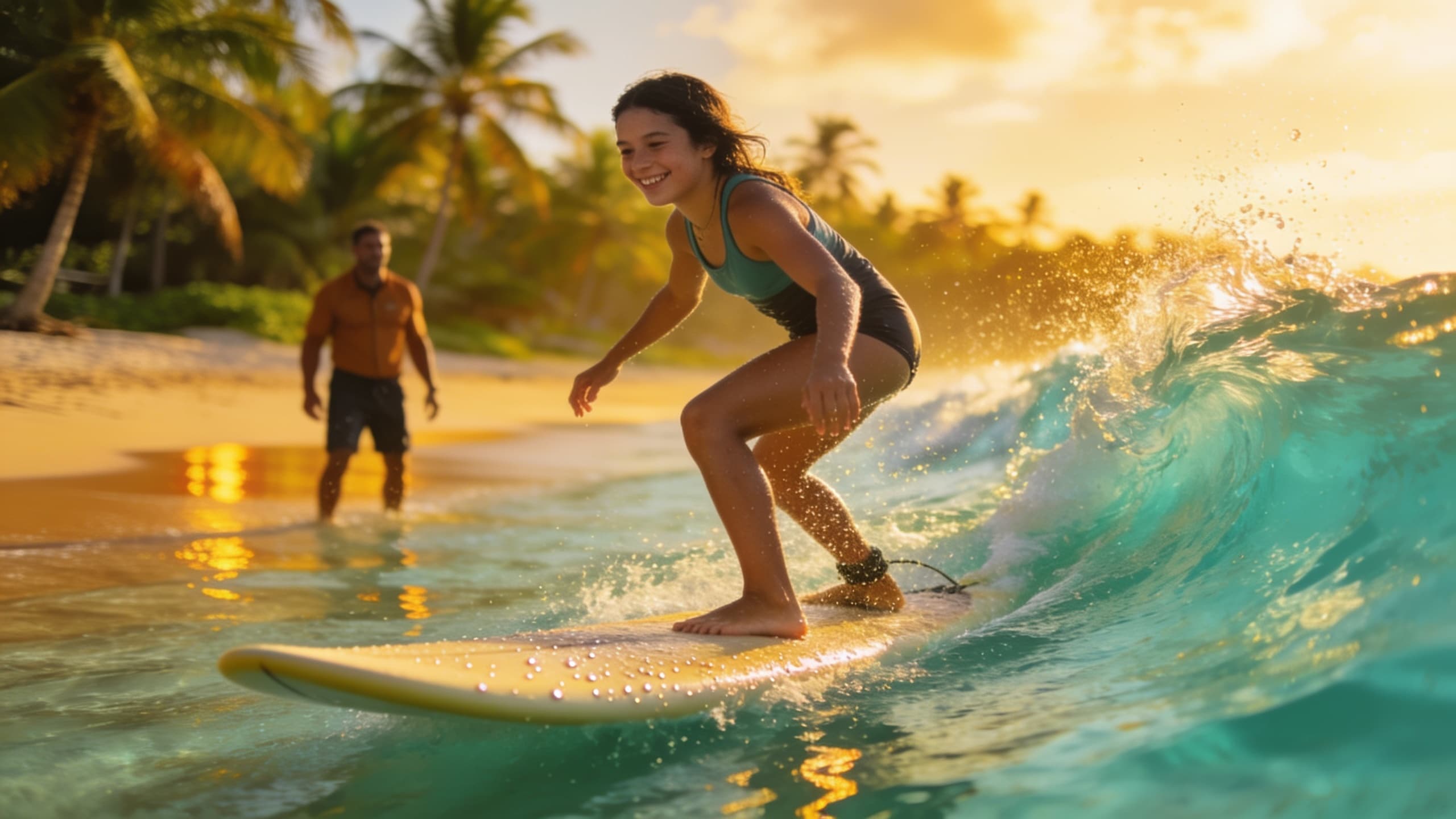
I'll walk you through what actually matters before you book that first lesson. Gear, cost, safety, and what genuinely happens when you paddle out. No fluff, no romanticized nonsense about "finding yourself in the ocean." Just the stuff I wish someone had told me.
This one's for total newcomers. Adventure travelers planning a beach trip, families looking for something to do together, or anyone who's watched someone glide across a wave and thought, yeah, I want to do that, without wasting money on the wrong board or getting dumped in conditions you have no business being in.
Table of Contents
- What Does It Really Take to Learn to Surf in 2025?
- How Much Does It Cost to Learn to Surf?
- Essential Gear for Beginner Surfers
- What Should You Expect at Your First Surf Lesson?
- Surf Safety Basics Every Beginner Must Know
- How to Choose the Right Beginner Surf School
- Best Beginner-Friendly Surf Destinations in 2025
- Frequently Asked Questions
What Does It Really Take to Learn to Surf in 2025?
Learning to surf takes patience, a decent baseline of fitness, and consistent time in the water. Most beginners need somewhere between 5 and 10 lessons before they can catch and ride a wave on their own on a soft-top longboard. It's a full-body sport that mashes together balance, paddling endurance, timing, and reading the ocean, which means progress has almost nothing to do with being athletic and everything to do with just showing up and repeating the motion.
And that's the part people underestimate. You're not going to be talented at this on day one. Nobody is.
The upside is that surf instruction has gotten way more accessible than it was even ten years ago. The International Surfing Association reports that surfing's global participation has climbed steadily ever since it debuted as an Olympic sport at the Tokyo 2020 Games, and all that visibility pushed more coastal towns to open certified schools aimed at complete beginners. You don't need to live next to some legendary reef break anymore. A lot of schools actually run their lessons on gentle, forgiving beach breaks precisely because they're easier to stand up on.
Here's roughly how it plays out. Your first lesson or two is all about paddling technique, drilling the pop-up on the sand, and learning to read whitewater. By lesson three or four, most people are getting to their feet on small rolling waves with the instructor helping out. Actually riding a wave on your own, picking your own wave, throwing in a turn? That usually shows up somewhere around session 8 to 15, spread across a few weeks or a dedicated surf trip.
How Much Does It Cost to Learn to Surf?
A single beginner group lesson usually runs between $50 and $100 USD, while private one-on-one sessions land anywhere from $80 to $200 depending on where you are and how experienced the instructor is. Multi-day camps and week-long packages, which bundle lessons, board rental, and sometimes a bed to sleep in, generally go from $300 to $1,200.
Prices swing a lot based on destination, group size, and season. Surf towns in Costa Rica, Bali, and Portugal tend to give you the best bang for your buck because there are tons of instructors and the tourism market is genuinely competitive. Lessons in California, Australia, or Hawaii sit at the pricier end thanks to demand and the plain old cost of living.
| Lesson Type | Typical Price (USD) | Best For |
|---|---|---|
| Group lesson (1 instructor, 4-6 students) | $50-$100 | First-timers, budget travelers |
| Semi-private lesson (2-3 students) | $70-$150 | Couples, friends, families |
| Private one-on-one lesson | $80-$200 | Fast progression, nervous beginners |
| 5-day beginner surf camp | $300-$700 | Vacationers wanting rapid improvement |
| 7-day surf and accommodation package | $600-$1,200 | Dedicated surf trips |
Beyond the lessons themselves, set aside some cash for board and wetsuit rental if it isn't already baked in (usually $10-$25 a day), reef-safe sunscreen, and a rash guard. My honest advice? Rent for your first handful of sessions instead of buying. Your ideal board size and fin setup is going to change as you get better, so there's no point locking yourself into gear you'll outgrow in a month. If you're weighing up programs in different countries, a directory like MySurfSchool lets you check verified community reviews and pricing side by side, which comes in handy when lesson costs and what's included vary this wildly from region to region.
Essential Gear for Beginner Surfers
The only gear a true beginner needs is a soft-top foam board, a leash, and depending on water temp, a wetsuit or rash guard. That's it. Everything else is optional until you level up. And most decent surf schools throw board and leash rental into the lesson price anyway, so you rarely have to buy a thing for your first few outings.
Choosing Your First Surfboard
Start on a soft-top (foam) longboard somewhere between 8 and 9 feet. These things are wide, thick, and stable, which makes paddling easier and gives you a much bigger margin for error when you're trying to pop up. Those sleek fiberglass shortboards the pros ride? Leave them alone for now. They're brutal for beginners and the sharp edges and fins genuinely up your injury risk. There's a reason instructors don't hand them to first-timers.
Wetsuits and Sun Protection
Water temperature decides your wetsuit thickness. In tropical spots like Bali or Costa Rica, where the water often sits above 78°F (25°C), a rash guard or a thin 1mm top does the job. Somewhere cooler like Northern California, Portugal, or the UK, you'll want a 3/2mm or 4/3mm full suit to actually enjoy yourself.
Reef-safe, mineral-based sunscreen isn't optional, by the way. You're out there for hours getting hit by UV light bouncing off the water, and regular chemical sunscreens have been shown to mess up coral reefs, which is exactly why a lot of marine parks now ban them outright. Get the mineral stuff.
Optional but Useful Extras
A leash keeps your board strapped to your ankle so it doesn't turn into a projectile for everyone around you after a wipeout. Surf wax or traction pads help you actually grip the deck. And if you're surfing in cold water and wind a lot, look into ear plugs made for surfers, because "surfer's ear" is a real long-term thing caused by exactly that kind of repeated exposure, and it's not fun.
What Should You Expect at Your First Surf Lesson?
A typical beginner lesson runs 90 minutes to 2 hours and moves through a pretty predictable progression: a safety talk on land, pop-up practice on the sand, paddling technique in the shallows, and finally actually riding whitewater toward the beach with your instructor coaching you. You will not get thrown into big waves on day one. Any legit school starts beginners in gentle, rolling whitewater close to shore, full stop.
Most lessons kick off with your instructor walking you through the ocean conditions, the tide, and whatever specific hazards that beach has going on. Then comes maybe 15 to 20 minutes of dry-land practice where you drill the pop-up, that motion of going from lying flat to a standing crouch in one smooth movement. This part matters way more than people expect. Once you're actually in the water you've got about two seconds to nail it, so the muscle memory you build on the sand is doing a lot of heavy lifting.
Out in the water, expect your instructor to physically line up your board, judge the wave timing, and sometimes give you a little shove to help you catch those first few waves. And no, that's not cheating. It's completely standard, and it lets you focus purely on standing up instead of also stressing about paddle timing. By the end of a two-hour lesson, most first-timers manage to stand and ride at least a few times, even if it's only for a second or two.
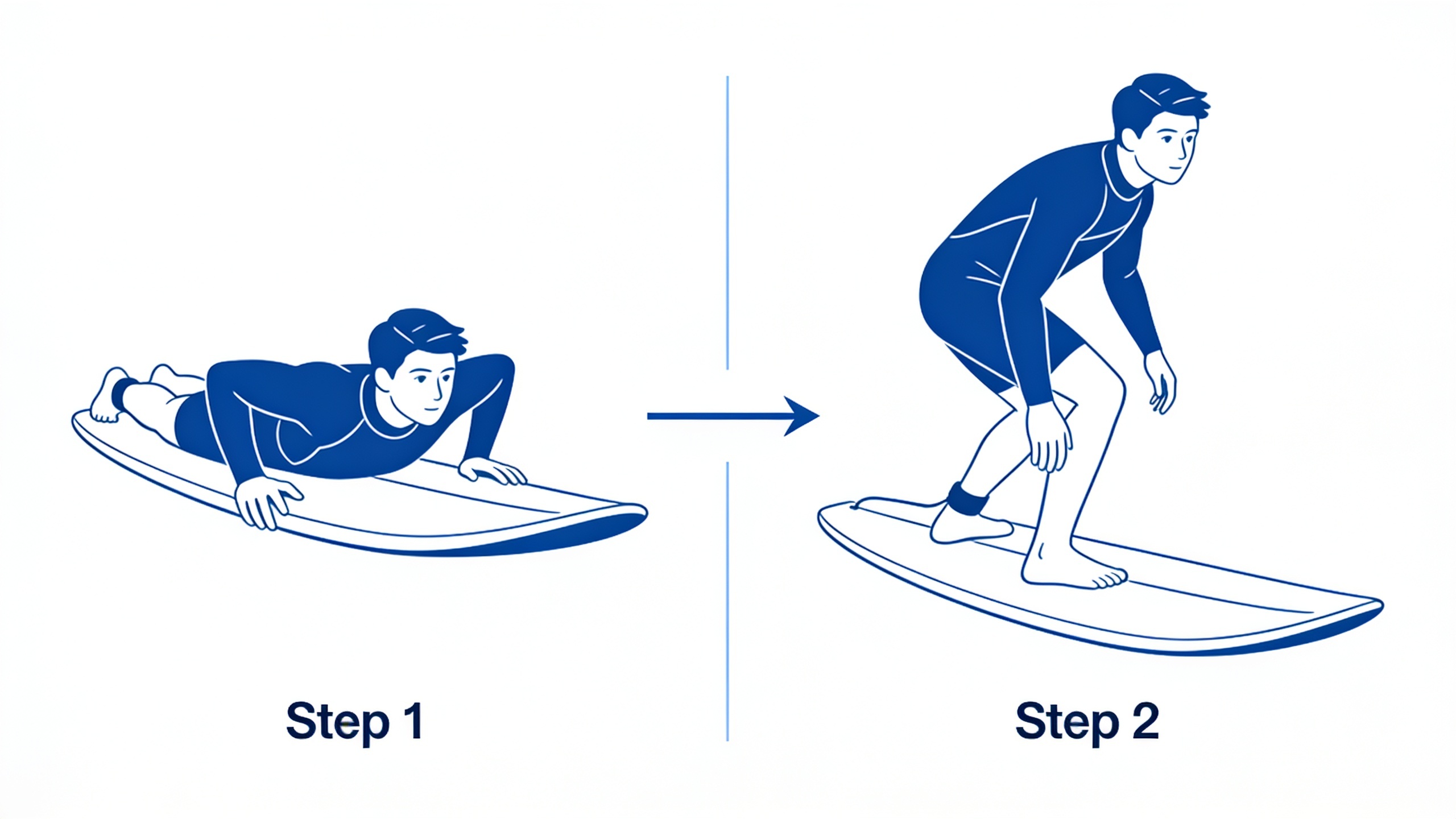
Group size affects how much attention you actually get. A 1:4 or 1:6 instructor-to-student ratio is normal for beginners and generally works well. Once you get past 1:8, you're looking at less coaching and fewer waves per person, which is worth asking about before you book.
Surf Safety Basics Every Beginner Must Know
The single most important safety rule for beginners: never surf alone, always check conditions with a lifeguard or instructor first, and learn to spot a rip current before you get in the water. Surfing has real risks. Drowning, board collisions, marine hazards, all of it. But nearly every serious incident is preventable with some basic ocean sense.
Understanding Rip Currents
A rip current is a narrow, fast-moving channel of water flowing away from shore, and it's one of the top causes of beach rescues on the planet. The United States Lifesaving Association reports that rip currents account for the large majority of rescues its ocean lifeguards perform in the US every year. You can usually spot one by looking for a gap in the incoming waves, water that looks discolored or churned up, or a visible channel of foam and debris heading out to sea. And if you ever get caught in one, do not fight it head-on. Swim parallel to shore until you're out of it. That's the whole trick.
Surf Etiquette and Right of Way
Surfing has an unwritten rulebook, and people take it seriously. The surfer closest to the peak of the breaking wave has priority, and dropping in on someone else's wave (it's called "snaking") is both rude and genuinely dangerous. As a beginner, steer clear of crowded lineups until you can actually control your board, because a runaway board is a real hazard to everyone in the water. Nobody's going to be gentle with you about it, either.
Sun, Marine Life, and Fatigue
Sessions often last an hour or two in direct sun and reflected glare, so dehydration and sunburn creep up on you fast. Learn the local marine hazards too. Jellyfish, sea urchins, stingrays, it all depends on where you are, and any good school will brief you on what actually matters for that beach. And don't sleep on fatigue. Paddling out over and over is way more exhausting than it looks, and knowing when you're done is a legit safety skill for a beginner.
How to Choose the Right Beginner Surf School
The right beginner school gives you certified, patient instructors, a gentle beach break suited to first-timers, small groups, and honest reviews from past students. Not every school marketing itself to tourists is actually qualified, so a little digging before you book saves you a lot of grief.
Look for instructors certified by a recognized body like the International Surfing Association (ISA) or a national surf coaching federation, because that certification usually requires water rescue training on top of coaching skills. Ask about the instructor-to-student ratio, whether board and wetsuit rental is included, and what happens if the conditions are unsafe on your day. Good schools will reschedule you rather than drag beginners out into a nasty swell just to keep the booking.
Reviews are honestly your most reliable signal, since they reflect what real students went through instead of polished marketing copy. A platform like MySurfSchool pulls those reviews together with location filters and booking tools, so you can compare a few schools in the same spot before you commit. That's especially handy when you're heading somewhere unfamiliar and can't just ask around in person.
One thing worth keeping in mind: plenty of great little surf schools are family-run operations with tiny marketing budgets, so a slick website doesn't automatically mean better teaching. Some of them work with local specialists to get found online (similar to how agencies like Digital Fusion Hub help small tourism businesses build booking sites and get more visible) simply so travelers can actually find them, not because they're necessarily the most experienced crew on the beach. Reading past the website into the actual reviews and photos is still the best way to judge.
Best Beginner-Friendly Surf Destinations in 2025
The best beginner destinations combine warm water, consistent small waves, and a solid local surf school scene. I'm talking Costa Rica's Tamarindo, Bali's Kuta Beach, Portugal's Ericeira region, and California's San Onofre. Each one has gentle beach breaks built for first-timers, plus enough schools and rental shops that the logistics basically sort themselves out.
| Destination | Water Temp (approx.) | Best Season | Why Beginners Like It |
|---|---|---|---|
| Tamarindo, Costa Rica | 80-84°F (27-29°C) | Dec-Apr | Warm water, no wetsuit needed, many schools |
| Kuta Beach, Bali | 79-84°F (26-29°C) | Apr-Oct | Long sandy beach breaks, affordable lessons |
| Ericeira, Portugal | 60-68°F (16-20°C) | Jun-Sep | Consistent small waves, UNESCO surf reserve |
| San Onofre, California | 62-70°F (17-21°C) | Jun-Sep | Gentle, slow-rolling waves, easy paddle-out |
| Waikiki, Hawaii | 76-80°F (24-27°C) | Apr-Oct | Historic birthplace of modern surfing, calm breaks |
If your surf trip is part of a bigger journey, it's worth lining up your surfing plans with your general travel research. Say you're combining a Pacific surf trip with a stopover in Asia. A lot of travelers end up looking into Japan's coastal towns near Chiba and Shonan, which have their own beginner-friendly breaks, and a resource like E2Japan can help sort out the logistics side of that, from finding hotels near the coast to figuring out local landmarks and travel norms once you're back on dry land.
And seasonality matters just as much as picking the right place. Even the best beginner beach can turn into an intermediate-or-worse situation when a big swell rolls through, so always check the seasonal forecast and talk to a local school about what to expect during your actual travel dates. Don't just assume a destination is beginner-friendly all year round, because it usually isn't.
Booking, Payments, and Planning Your Surf Trip
Most schools take the usual stuff, credit cards and mobile payment apps, though a growing number of tourism businesses in surf towns have started dabbling in cryptocurrency payments as an option for international travelers trying to dodge currency conversion fees. If that's your thing, sites like Cryptocoinsjournal track how crypto payment adoption is spreading across travel and hospitality, which is useful context when you're booking abroad and want flexible ways to pay.
On the business end, surf tourism has gotten pretty cutthroat online, with schools pouring money into SEO and content marketing to reach people googling where to learn. Some smaller operators now lean on AI-assisted tools like RobinRank to handle their content and online visibility, which is part of a bigger shift toward automation in how travel businesses market themselves. Worth knowing if you ever notice surf schools popping up in your search results that definitely weren't there a year or two ago.
A few practical planning notes. Book your lessons a few days ahead during peak season, double-check the cancellation policy for bad weather, and if you're bringing kids, ask specifically about age minimums. Most schools set the floor at 6 to 8 for group lessons, though private lessons can sometimes take younger kids with a parent right there in the water.
Last thing. Give yourself more time in the water than you think you'll need. Most beginners who bail after one lesson do it because they had no idea how brutal the paddling would be. But the ones who stick it out for three to five sessions almost always come away noticeably more confident and catching way more waves by the last day. It really does click, you just have to grind through the tired-arms phase first.
Frequently Asked Questions
Am I too old to learn to surf?
Nope. Adults absolutely can learn, and age matters way less than fitness and stubbornness. Being a decent swimmer, feeling okay in ocean water, and being willing to fall over and over again all count for more than being young. Plenty of surf schools will tell you that adult beginners in their 30s, 40s, and beyond progress at roughly the same clip as teenagers once they're on the right equipment with proper coaching.
How many lessons until I can actually surf on my own?
Figure 8 to 15 lessons before you can confidently paddle out, catch a wave, and ride it back to shore without your instructor hovering. It really depends on how often you practice, though. Someone doing daily lessons at a week-long camp is going to blow past someone squeezing in one lesson a month.
What should I wear to my first lesson?
A swimsuit or rash guard as your base layer. The school will hand you a wetsuit if the water's cold enough to need one. Skip the loose jewelry, tie back long hair, and slap on reef-safe sunscreen before you show up, because you'll be baking in direct sun the whole time.
Do I need to be a strong swimmer?
You should be comfortable swimming 50 to 100 meters and treading water without panicking, since you might have to swim after a lost board or through whitewater now and then. Most reputable schools ask about your swimming before booking and will steer you toward something else if your swimming isn't up to the conditions at that particular beach. Take that seriously, they're not being difficult.
How much does it cost to buy my own beginner gear?
A beginner soft-top board runs about $250-$500 new, or $100-$250 used. A basic 3/2mm wetsuit is $80-$200, and a leash is $15-$30. Honestly though, most beginners are better off renting for their first several sessions before dropping money on any of it, because your ideal board size is going to shift as your skills come along.
Learning to surf in 2025 is more doable than it's ever been, thanks to better beginner gear, more certified schools all over the place, and easier ways to research and book before you even leave home. Start small. Pick a gentle beach break. Pay for a few real lessons instead of trying to teach yourself off YouTube. And give yourself permission to be a wobbly, wipeout-prone mess for a while, because that's exactly how every single surfer on earth got their start. No exceptions.