How to Choose Surf School Options That Match Your Skill Level
Learning to surf goes one of two ways. Either it becomes a lifelong obsession you'll happily rearrange your whole life around, or you end up sore, humiliated, and dead certain that surfing "just...
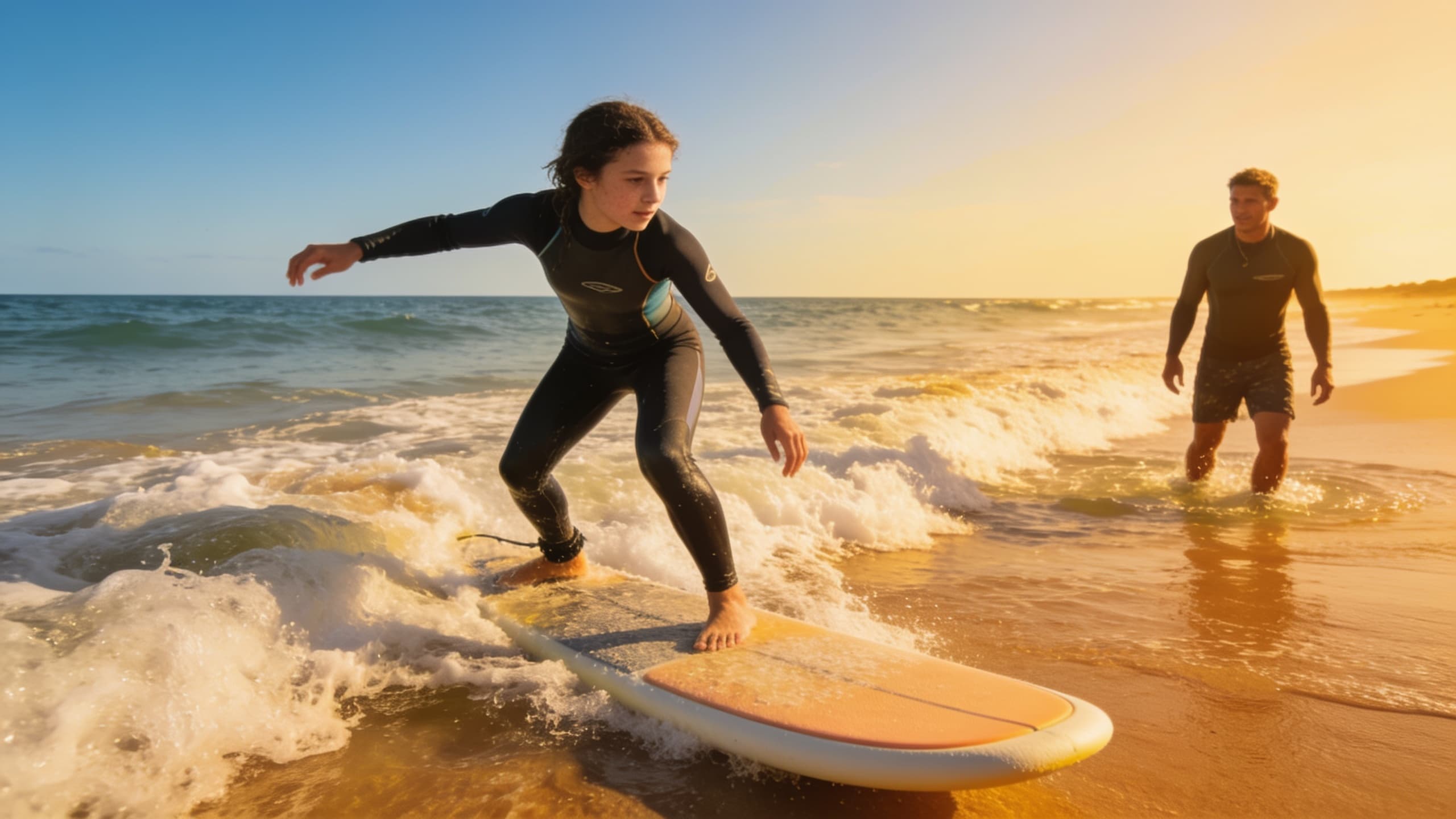
So this is my attempt to save you from a bad first session. I'll walk you through what actually matters when you're comparing surf schools, how the whole calculus shifts depending on whether you're a total newbie or an intermediate coming back for more, and how to use reviews and directories so you're not just guessing. There's stuff in here for families, for people counting every dollar, and for anyone building a trip around getting in the water.
Table of Contents
- Why Choosing the Right Surf School Matters
- How Do You Choose a Surf School as a Beginner?
- Matching a Surf School to Your Skill Level
- What to Look for When You Choose a Surf School
- Surf School Tips for Families and Group Travelers
- How Much Does a Surf School Cost?
- Logistics: Getting to and From Your Surf School
- Using Reviews and Directories to Choose With Confidence
- Frequently Asked Questions
Why Choosing the Right Surf School Matters
The right surf school shortens your learning curve, keeps you safer, and makes the whole thing genuinely fun instead of terrifying. The wrong one does the opposite. An overcrowded class, an instructor you can barely understand, a break that's way above your pay grade... any of these can set you back weeks or just kill your enthusiasm for the sport entirely.
Surfing is one of those skills where everything stacks on top of everything else. Paddling, reading waves, the pop-up, basic ocean safety, they all build on each other. Throw a beginner into fast, hollow waves with a huge group and no real supervision, and they won't absorb a single thing. And it cuts the other way too. Stick an intermediate surfer in a whitewater class full of rank beginners and watch them plateau out of sheer boredom.
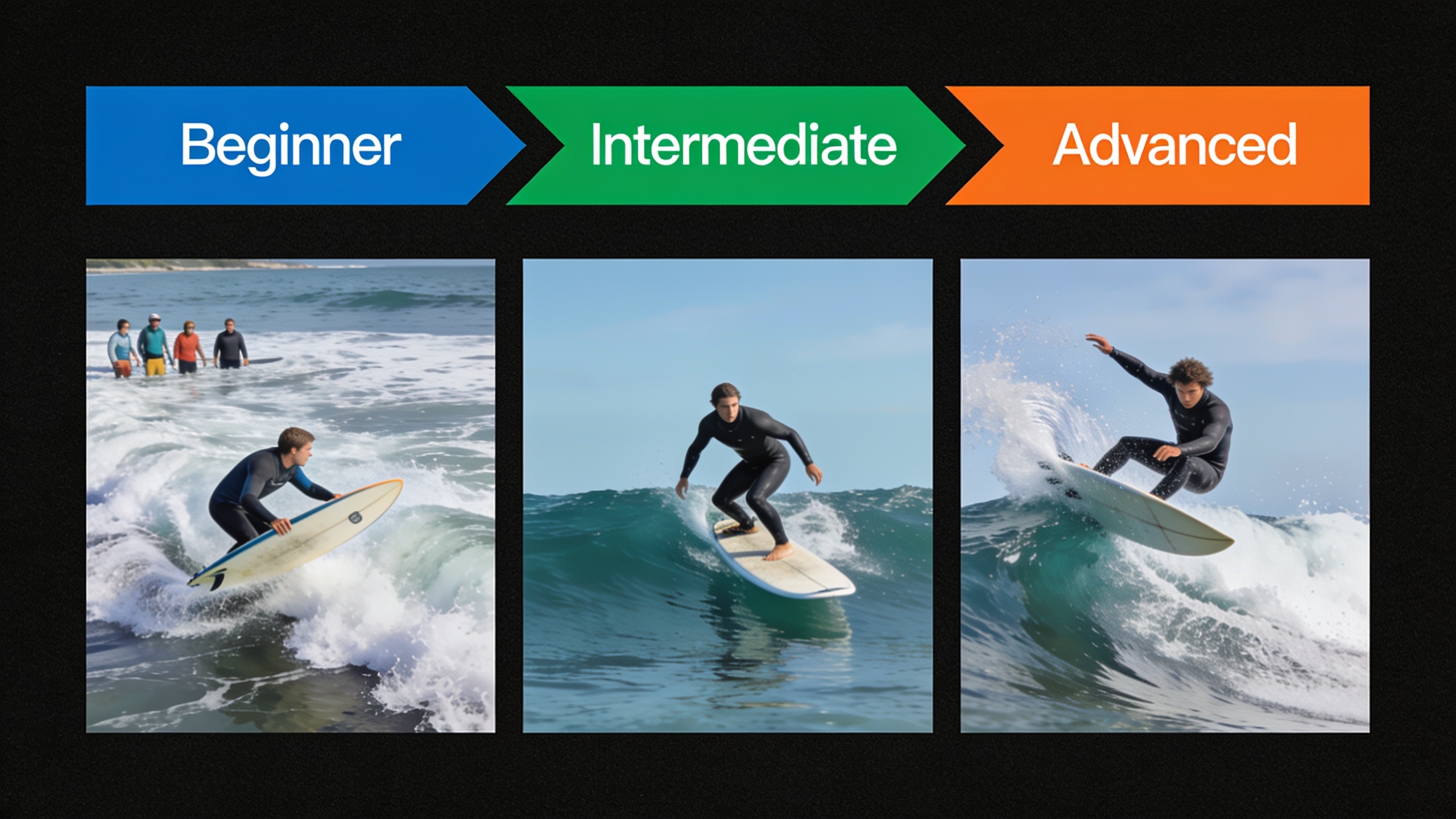
Which is why picking a school shouldn't be a five-minute afterthought. Give it the attention you'd give to hiring a guide for a mountain you've never climbed. Honestly, the logic here is a lot like how a service like Advisorynavigator pairs people with the right advisor for a specific problem. You don't want someone who's generally qualified. You want someone who's actually solved your exact problem before.
How Do You Choose a Surf School as a Beginner?
If you've never stood on a board, pick a school that specializes in true beginners, teaches on soft-top longboards, and keeps its classes small. Four or five students per coach, tops. And forget chasing a "famous" surf destination. Small, slow-breaking whitewater matters way more to you right now than bragging rights.
Here's the part people underestimate: when you're new, the real risk isn't just cracking your head on the board. It's motivational. One bad session and you'll walk away convinced surfing is impossible, when the truth is the setup was just wrong for a first-timer. Wrong wave size, wrong board, too many people. So look for schools that actually market themselves to beginners, not the ones catering to experienced surfers who want a guide to show them secret breaks.
On MySurfSchool, for example, listings come tagged with skill-level badges. Corky Carroll's Surf School in Nosara, Costa Rica, and Southcoast surf school in Maspalomas, Spain, are both flagged as beginner-friendly, which lets you filter out the programs that'll chew you up in about two seconds.
Oh, and read the actual reviews, not just the star rating. A 5.0 built on ten reviews that keep mentioning "patient instructors" and a "beautiful beach" (that's Corky Carroll's) tells you something real about how they teach. A generic four-star badge with zero detail tells you basically nothing.
Signs a School Is Genuinely Beginner-Focused
A few things I'd scan for before booking anything:
- The listing straight-up uses words like "beginner," "first-timer," or "never surfed before"
- Lessons run on longer, stable foam boards, not twitchy performance shortboards
- Class sizes are capped, and reviews use words like "patient" or "great communication"
- The break is described as gentle, sandy-bottomed, or protected. Not a reef or point break famous for punishing people
Matching a Surf School to Your Skill Level
The single biggest factor in choosing a school isn't price and it isn't location. It's whether the program is actually built for where you are right now. Schools that teach across the whole range, complete beginners up to advanced surfers polishing their technique, should say so clearly and explain how the coaching actually changes between groups. If they can't articulate that, be suspicious.
Beginner Surfers
Beginners get the most out of small groups, gentle beach breaks, and instructors who'll actually spend time on the boring fundamentals: paddling posture, timing the pop-up, reading whitewater. Some schools offer video analysis, and for a beginner that's gold. There's a limit to how much verbal feedback can do when you literally cannot feel what your body is doing wrong. Seeing it on a screen fixes that in seconds.
Intermediate Surfers
If you can already catch unbroken waves and turn but you want to sharpen your wave selection, positioning, or style, look for semi-private or small-group coaching, not the same beginner curriculum recycled. A program that lists both "Beginner" and "Intermediate" tags, the way Corky Carroll's does, is telling you the coaching actually flexes instead of running everyone through the identical script.
Advanced Surfers
Advanced surfers are usually better off with guided sessions or coaching camps aimed at specific breaks, tides, or maneuvers rather than a generic "lesson." And if a listing never mentions advanced coaching at all? Assume it doesn't do it. Don't talk yourself into believing otherwise. That school is built for beginners and casual improvers, full stop.
| Skill Level | What to Prioritize | Red Flags to Avoid |
|---|---|---|
| Complete beginner | Small class size, soft-top boards, gentle whitewater break, patient instructors mentioned in reviews | Mixed-level classes with no beginner-specific track |
| Intermediate | Semi-private coaching, wave-reading and turning technique, feedback tools like video review | One-size-fits-all group lessons with no skill breakdown |
| Advanced | Guided sessions at specific breaks, performance coaching, flexible scheduling around swell/tide | Listings with no mention of advanced or guided options |
What to Look for When You Choose a Surf School
When you're comparing schools, the things that matter most are the instructor-to-student ratio, whether you and the coach share a language, safety practices, equipment quality, and how recent and detailed the reviews are. Price matters, sure, but only alongside what's included. Board rental, wetsuit, insurance, photos or video... all of that varies wildly from school to school.
I'd build a quick mental checklist before you start browsing:
- Skill-level fit. Does the school clearly teach your level, or is it aimed at someone else entirely?
- Language. Can the instructors actually teach in a language you understand well? A lot of listings show flags for languages spoken. Cape Town Surf Experience, for instance, lists both English and Afrikaans, which matters a lot if you want real verbal feedback and not just someone silently demonstrating.
- Group size and vibe. Reviews that mention "fun atmosphere," "great for children," or "social hostel vibes" (like the ones for One More Wave Surf House in Uluwatu) tell you as much about the experience as any technical detail. For most travelers the social energy matters just as much as the coaching.
- Price relative to what's included. A "$" budget spot and a "$$" moderate one can both be great. They probably just differ on group size, gear, or extras like photos and transport.
- Review recency and specificity. Ten reviews averaging 5.0 that mention specific stuff, patient instructors, video analysis, professional coaching, beat a high score buried in vague fluff every time.
This all applies whether you're booking a single two-hour lesson or a full multi-day package like the Costa Rica Surf Trip program in Sámara, which bolts lessons onto broader trip planning and adventure activities.
Surf School Tips for Families and Group Travelers
Families should pick a school that openly welcomes kids, uses extra-buoyant boards for the smaller or lighter surfers, and keeps a calm, encouraging tone rather than a performance-obsessed one. Group travelers have a slightly different problem: you want a school that can juggle mixed skill levels in the same trip without leaving anyone either bored stiff or in over their head.
Southcoast surf school in Maspalomas is one listing that specifically flags itself as "great for children," on top of a fun atmosphere and patient instructors. That's exactly the combination families should be hunting for in reviews. And when you're traveling with kids or a mixed-ability crew, it's worth asking (or looking for review mentions of) how the instructors split their attention across different abilities in a single session. A family usually shows up with both a nervous first-timer and someone who's basically a fish.
Group trips built around surfing, as opposed to one lonely lesson wedged into a vacation, are also worth a look. The Costa Rica Surf Trip listing in Sámara bundles professional instruction with adventure activities and full trip planning, which takes a huge chunk of coordinating headaches off your plate if nobody in the group wants to be the designated logistics person.
How Much Does a Surf School Cost?
Surf lesson pricing usually shakes out into three rough tiers, budget, moderate, and premium, and the gaps between them come down to group size, location, gear quality, and included extras more than the quality of the actual teaching. On directories like MySurfSchool, schools get tagged with simple price markers ("$" for budget, "$$" for moderate) so you can filter fast before diving into the reviews.
| Price Tier | What It Typically Reflects | Example Listings (per MySurfSchool tags) |
|---|---|---|
| $ Budget | Smaller operations, simpler amenities, often strong community feel | Corky Carroll's Surf School (Nosara, Costa Rica); One More Wave Surf House (Uluwatu, Indonesia) |
| $$ Moderate | Established schools, often with added services like video analysis or trip planning | Porto Surf School (Porto, Portugal); Southcoast surf school (Maspalomas, Spain); Cape Town Surf Experience; Costa Rica Surf Trip (Sámara) |
One caveat worth flagging: exact prices for individual lessons or packages usually aren't posted in the general directory view. So treat these tiers as a relative comparison tool, not a fixed price list, and always confirm current rates with the school before you hand over any money.
And don't forget the sneaky extras. Board and wetsuit rental if they're not included, transport to the beach, and accommodation on multi-day trips. Add those up and a "budget" lesson can quietly balloon into a "moderate" overall cost by the time you've paid for everything.
Logistics: Getting to and From Your Surf School
Surf schools tend to sit well outside city centers, tucked near the specific beaches with the right teaching waves, which means transportation deserves as much thought as the lesson itself. Before you commit, check how far the place is from your hotel or the airport, and figure out whether transport is included, arranged separately, or entirely your problem.
If your trip runs through the UK's south coast surf scene around Bournemouth or Wimborne Minster, a solid local option like Wimborne Cab Taxis, which runs a 24/7 licensed service across the area, makes getting from your hotel to a crack-of-dawn lesson a lot less painful than renting a car. Same idea over in Turkey. Travelers heading to the coast for water sports, or stitching a surf trip together with sightseeing in Antalya or Istanbul, often lean on services like The VIP Transfer for airport and hotel transfers. When your start times are already dictated by the tides, booking private transport ahead of time removes one more thing that can go wrong.
Building transport into the decision matters more than it looks. A school with glowing reviews isn't worth much if getting there swallows half your day or demands logistics you never planned for. So when you're comparing options on a directory, check the listing details or just email the school and ask whether they offer pickup, especially for beginner and family bookings where a little extra convenience goes a long way.
Using Reviews and Directories to Choose With Confidence
The fastest way to book a school with confidence is to compare verified community reviews across several options instead of swallowing any single school's own marketing whole. Directories that pull together reviews, ratings, languages spoken, and skill-level tags let you narrow things down to a shortlist in minutes rather than clicking through a dozen websites one by one.
MySurfSchool, for one, lets you compare schools across 31 countries and browse by continent, Europe, Asia, Oceania, North America, South America, and Africa, with community reviews attached. Real traveler feedback, like the review describing a "patient" and fun session with a wakesurf instructor in Miami, or the account of a kitesurfing lesson in Sicily that praised a "no wind, no pay" policy and shallow, safe beginner conditions, paints a far clearer picture than a naked star rating ever could. There are also Featured and newly added tabs that surface schools which might never show up in a normal web search but have strong, recent reviews behind them.
Now for the slightly less glamorous truth about searching online. The travel and hospitality world increasingly runs on specialized tools to churn out content and juice visibility. Platforms like RobinRank automate SEO content writing and publishing for businesses, which is a big part of why googling "best surf school in [destination]" spits back a weird mix of genuinely useful guides and heavily optimized marketing pages dressed up as advice. That's exactly why cross-referencing a school's own website against independent, aggregated reviews on a directory is just smart, not some optional extra step you can skip.
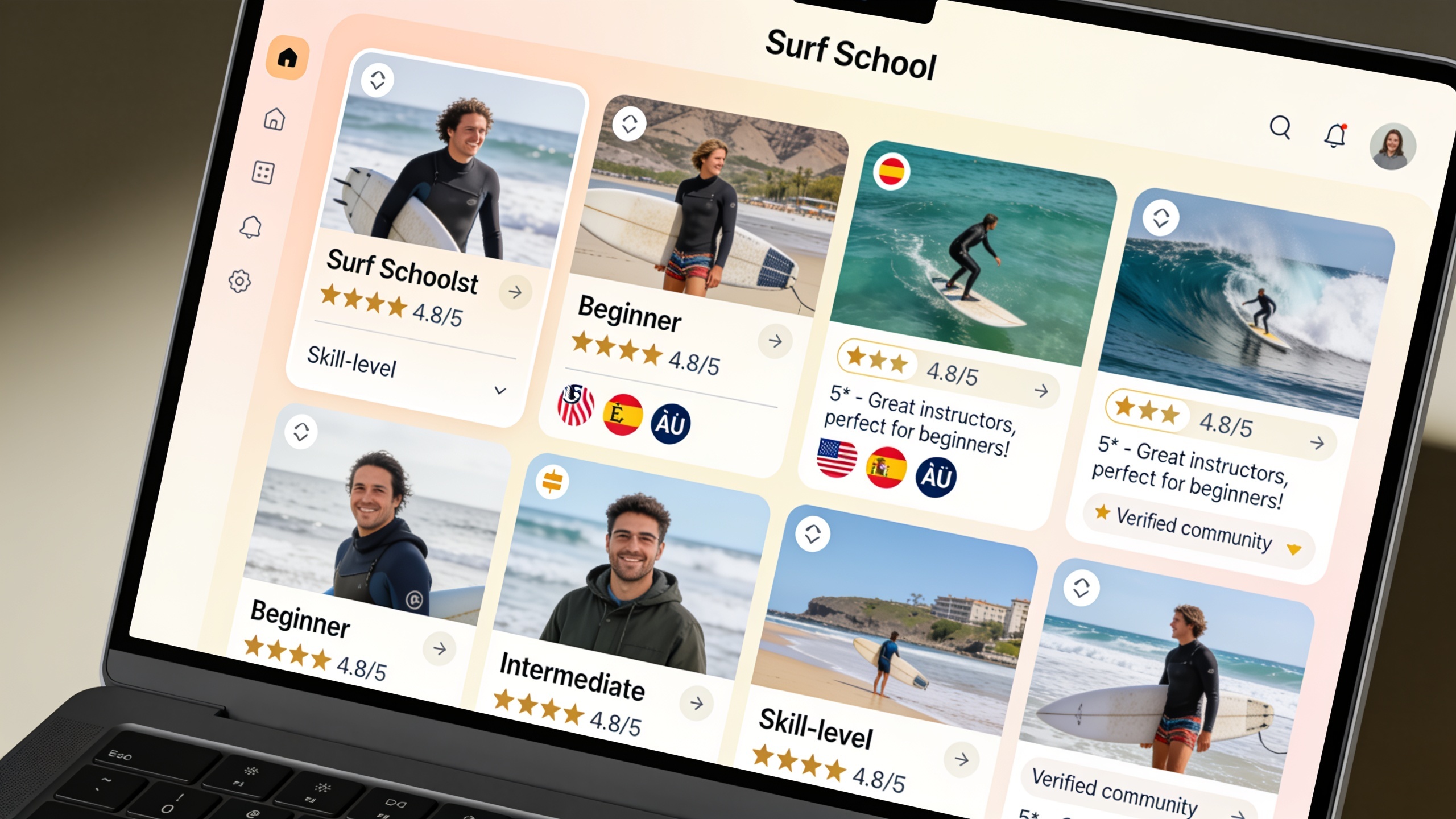
Once you've got a shortlist of two or three, one last check saves a world of regret. Read the most recent three to five reviews in full, confirm the language options actually match what you speak, and double-check that the skill-level tags line up with where you really are. That's honestly one of the most reliable surf school tips going, and it takes less time than arguing with your travel partner about where to eat dinner.
Frequently Asked Questions
How do I know if a surf school is right for a complete beginner?
Look for explicit beginner tags or language on the listing, small class sizes, soft-top longboards, and reviews that mention patience, clear communication, and gentle waves. Schools like Corky Carroll's Surf School in Costa Rica and Southcoast surf school in Spain flag themselves as beginner-friendly, which is a quick shortcut to narrow the field.
Should I choose a private lesson or a group class?
Depends on your goals and your budget. Group classes are usually cheaper and more social, which is perfect for families or friends traveling together. Private or semi-private sessions get you individualized feedback, which is genuinely useful for intermediates chipping away at a specific technique problem. Just check whether a school offers both or only one format before you book.
Does the destination matter more than the school itself?
Both matter, but for your actual learning? The school wins. A jaw-dropping beach with an overcrowded, mismatched class won't teach you half as well as a tightly run beginner program at some no-name break. That said, the destination does affect wave consistency and season, so make sure your travel dates line up with decent conditions for your level.
What languages should I expect surf instructors to speak?
Wildly variable by school and region. A lot of listings just show you the languages spoken up front. Porto Surf School in Portugal teaches in English and Portuguese, while Cape Town Surf Experience offers English and Afrikaans. Always confirm the school can teach comfortably in a language you understand, especially as a beginner who needs to actually follow the safety instructions.
Is it worth booking a multi-day surf trip instead of a single lesson?
For a lot of people, yeah. A multi-day trip or package, like the Costa Rica Surf Trip program in Sámara that folds lessons into broader trip planning, usually gets you better progression than a single one-off, simply because skills build over back-to-back sessions. If you're serious about improving fast, it's worth checking whether a school offers packages at all.
At the end of it, choosing the right surf school just comes down to matching a program's teaching style, class size, and skill focus to where you actually are in your surfing, not where you'd like to imagine you are. Spend the extra ten minutes comparing a few listings, read the recent reviews properly, sort out how you're getting there, and you'll set yourself up for a session, whether it's your first or your fiftieth, that actually feels like progress instead of a fight.